
© Kaupo Kikkas
1938
In October 1938, aged twenty-five, Coke destroyed everything he had written before 1935.
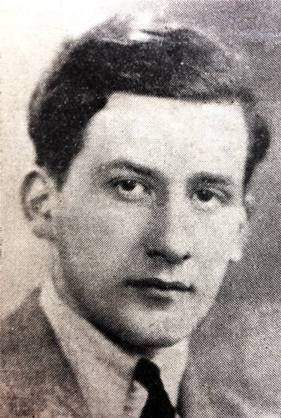
Coke in his twenties. The photograph is undated and the photographer is not named.
The Sheffield Telegraph broke the story: "The 25-year-old squire of Pinxton, Derbyshire, Mr. Roger Sacheverell Coke, whose passion and occupation is music, has destroyed three years' work of composition, because he thought they were unworthy of his more mature style." The Nottingham Evening Post listed what had gone: "two piano concertos, a symphony, a number of piano pieces, and a sonata and an elegy for voice and orchestra, all composed between 1932 and 1935". A critic in the Derby Evening Telegraph put the figure at seventeen works that December, and thought Coke had been much too hard on himself: "Considering the very friendly reception given to his early works, Mr. Roger Sacheverell Coke… will be said by some to have been a little too self-deprecatory."
He had been. His own paper had called the First Symphony a triumph the year before. But Coke dated his second period from 1935, and the music of the following six years is what is being played now.
A little of the burned music can still be described. When the Second Concerto was broadcast from Bournemouth in March 1934 under Sir Dan Godfrey, the Radio Times billing carried a note: the work "was written in 1933, when the composer was twenty years of age, and has so far received four performances, the first being at the Pump Room, Bath", and its three movements are bound together by a motive heard in the introduction which "makes an appearance both in the 'Romance' and the 'Caprice'. Thus, the whole work is imbued with a feeling of continuity." A cyclic scheme, at twenty.
The destruction had a side effect he can hardly have intended. The works he burned were the ones with a public record behind them: the two Bath concertos, the Chesterfield symphony, the pieces that had brought The Tatler and the Sheffield Telegraph up to Derbyshire. What survived was almost all unperformed. After 1938 his reputation and his music stop describing each other, and the warmest notices of his career refer to pieces nobody can now hear.
Contents · Previous: The prodigy · Next: The war years
© Simon Callaghan 2026. This account was written from my own research archive on Roger Sacheverell Coke, with AI assistance in drafting. Every statement in it rests on a document listed on the sources page.