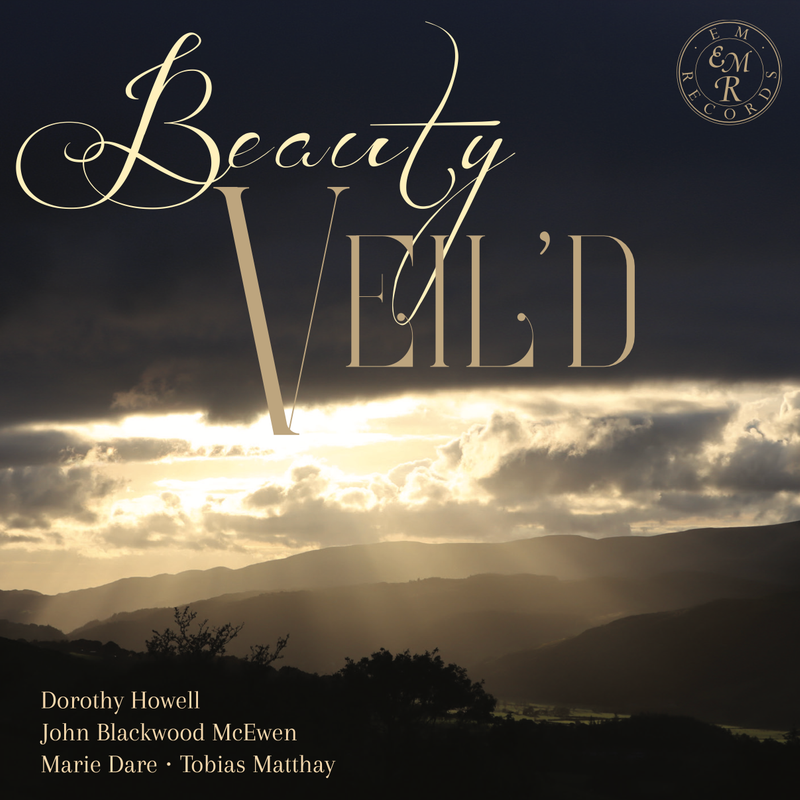
Beauty Veil'd
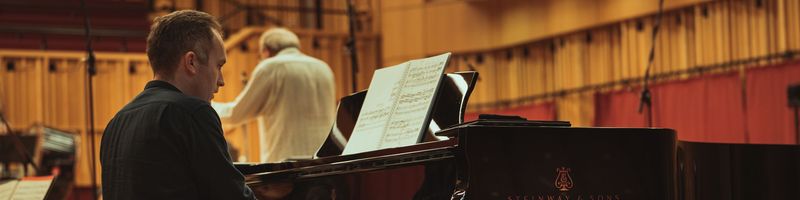
With the Berkeley Ensemble — Sophie McQueen (violin), Francesca Barritt (violin), Dan Shilladay (viola), Gemma Wareham (cello) and Tom Wraith (cello)
Every work here is a world premiere recording, and one of them had to be pieced back together first: Dorothy Howell's String Quartet in D minor, lost for decades, was reconstructed from pencil sketches by the Berkeley Ensemble's violist Dan Shilladay. Around it are Marie Dare's Phantasy Quintet in C minor, Howell's Adagio & Caprice for violin and piano, the Piano Quartet in One Movement by Howell's teacher Tobias Matthay, and John Blackwood McEwen's Nugae, seven bagatelles for string quartet.
The music of Dorothy Howell, once cheered by the popular press and championed by Henry Wood, is now largely forgotten. Who is to blame? The answer is surely complicated, but Howell's fall from fame was not for want of talent. She was also well connected: her circle included Wood, her former teachers Tobias Matthay and John Blackwood McEwen, and the composer Herbert Howells.
Howell and her near contemporary Marie Dare probably never met, although their lives followed a similar path from early, multi-faceted fame to later obscurity. Although it is tempting to ascribe this to a century of casual misogyny, it is but one important factor. McEwen, Matthay and many others also languish in obscurity, casualties of changing tastes as modernism swept Europe twice in the wake of two World Wars. Perhaps now, in today's more pluralistic era, it is time to re-evaluate Howell and her milieu.